Inheritance Tax Planning in Banstead
If you own a detached or semi-detached home in Banstead, there is a good chance your estate exceeds the inheritance tax threshold.
The average property price in Banstead is around £710,000. Detached homes regularly sell for over £900,000. If you bought your home in the 1980s or 1990s, you may have paid a fraction of that.
Now add your savings, your pension, any investments, and personal possessions. For many Banstead residents, the total is somewhere between £900,000 and £1.5 million.
At 40% tax on everything above your allowances, the bill can be substantial. But it is also, in most cases, avoidable.
I help Banstead families reduce that bill, often to zero.
Inheritance Tax: A Brief Overview for Banstead Homeowners
When you die, HMRC calculates the value of everything you own. If that total exceeds your available allowances, your family pays 40% tax on the excess.
The key allowances are:
Nil rate band: £325,000 per person. This is the basic tax-free amount.
Residence nil rate band: Up to £175,000 per person, but only if your home passes to your children or grandchildren. This allowance tapers if your estate exceeds £2 million.
Spousal transfer: If your spouse dies first and does not use their full allowances, the unused portion can transfer to you.
For a married couple leaving their home to their children, the maximum combined allowance is £1 million.
That sounds like a lot. But in Banstead, where a four-bedroom detached house can easily exceed £900,000, a married couple's combined estate can reach £1.2 million or more once you add savings and pensions.
Inheritance tax planning is the process of using every available rule, exemption, and strategy to reduce the taxable portion of your estate. Done well, it can bring your family's tax bill down to nothing.
What Your Family Faces Without a Plan
I have worked with families who came to me after losing a parent. They had no plan in place. Here is what they dealt with:
The estate was valued. A tax bill arrived. It was due within six months. The estate was frozen in probate, so the family could not access the money to pay it. The only option was to sell the house they had grown up in, on a property market that does not wait for grieving families.
In Banstead, where homes hold significant value, the tax bill is often large enough that it cannot be paid from savings alone. That leaves the property as the only source of funds.
This is not hypothetical. It happens regularly to families who assumed their estate was not big enough to worry about.
Planning prevents this. It gives your family options, not obligations.
Why the Numbers Are Not as Simple as They Seem
Let me walk you through a Banstead example.
Robert is 71, a widower living in a detached house on one of the residential roads near Banstead High Street. He and his late wife Janet bought the house in 1986 for £98,000. It is now worth £920,000.
Janet died in 2021 and left everything to Robert. Her nil rate band (£325,000) and residence nil rate band (£175,000) were unused and transferred to him.
- Home: £920,000
- ISA and savings: £130,000
- Pension: £95,000
- Car, personal effects: £25,000
Total estate: £1,170,000
His available allowances: £650,000 (two nil rate bands) plus £350,000 (two residence nil rate bands) = £1,000,000.
On paper, his taxable estate is £170,000, and the inheritance tax bill is £68,000.
But Robert has a complication. He wants to leave £100,000 to a favourite charity and the rest to his two adult children equally. He assumes the charitable gift will reduce his estate. It does, but it also qualifies the remaining estate for a reduced inheritance tax rate of 36% instead of 40%, provided the charitable gift is at least 10% of the net estate.
The interaction between the charitable gift, the reduced rate, and the available allowances changes the calculation entirely. Depending on how the will is structured, Robert could pay anywhere from £0 to £61,200 in inheritance tax.
The difference between a well-structured will and a poorly drafted one can be tens of thousands of pounds. That is what inheritance tax planning addresses.
How We Work Together
We meet for up to 90 minutes. I will ask about your family, your assets, your wishes, and any concerns.
This is not a tick-box exercise. I need to understand your full situation, not just the numbers, but the people and relationships behind them.
Some of my best work has come from details that clients initially thought were irrelevant.
After our meeting, I research your situation in detail. I run the calculations, identify every allowance and exemption that applies, and develop a recommended strategy.
I then write a report in plain English that explains exactly what I propose, why it works, and what it costs.
You will receive this report about a week before our next meeting.
We meet again to review the report. I will answer every question until you are satisfied.
Once you give the go-ahead, I handle the implementation: drafting or updating wills, setting up trusts where appropriate, and coordinating with your solicitor or accountant if needed.
This typically takes one to three months.
I do not take on dozens of clients at once. I work with a small number of families each month because this work requires attention and care. If you are looking for a production-line service, I am not the right fit. If you want someone who will sit with the details until they are right, we should talk.
The families I work with typically eliminate their inheritance tax bill entirely. Those who can't eliminate it reduce it by tens or hundreds of thousands of pounds.
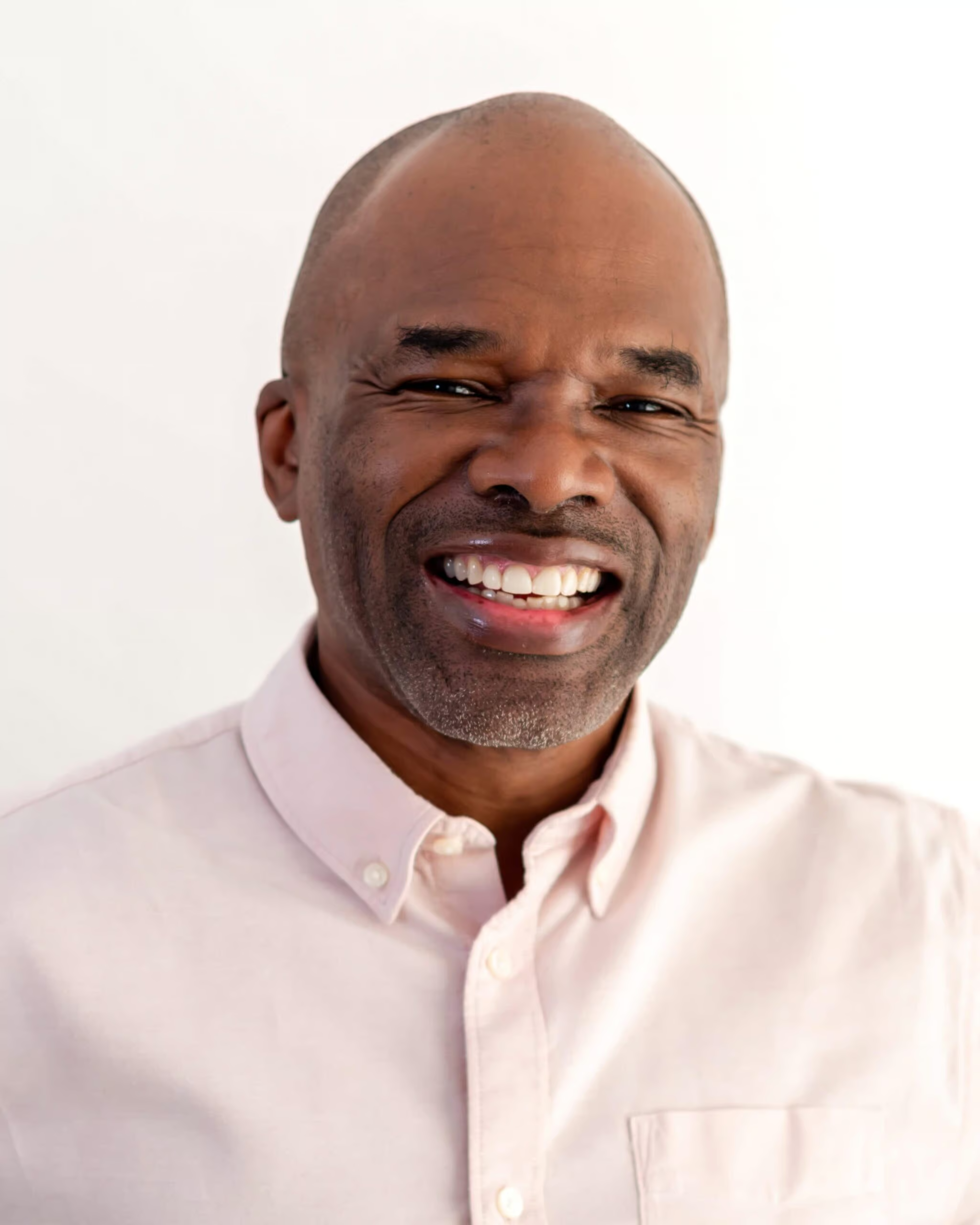
About Ade
I am Ade, and I have spent 35 years working in one specific area: inheritance tax planning, estate planning, and probate.
I do not offer general legal advice. I do not handle conveyancing, divorce, or commercial disputes. My entire professional focus is on helping families keep their wealth intact across generations.
That level of specialism matters. Inheritance tax is full of interactions between rules, and those interactions are where the savings are found. A generalist adviser may know the rules individually. I know how they work together.
I work with clients across Banstead, including Banstead Village, Nork, Burgh Heath, and Tattenhams, as well as throughout Surrey, England, and Wales.
What Makes This Different
That is what I do. I do not give generic advice. I work through your actual numbers, your actual family structure, and your actual goals, and I produce a plan that fits.
I charge fixed fees, agreed before any work begins. I explain everything in plain English. And I am available directly, not through a receptionist or a call-handling service.
If you want clarity about where you stand and what your options are, this is where you get it.
From Families I Have Worked With
Frequently Asked Questions
Will my Banstead home push my estate into inheritance tax?
It is likely to. The typical Banstead home sits around £660,000, comfortably above the £500,000 a single person can leave tax-free once the home goes to children, and detached houses commonly run well over £900,000. So the property alone can create a tax bill for a single person, and it takes a couple’s estate a long way towards their combined £1 million allowance before savings and pensions are counted.
My detached Banstead home is worth over £900,000. Could I lose part of my allowances?
The residence allowance only tapers once your whole estate passes £2 million, so a £900,000 home keeps it in full. The point to watch is the 40% rate on everything above your allowances. A £900,000 home plus pensions, savings and investments can build a sizeable taxable estate, and that is where planning ahead, using both spouses’ allowances and lifetime gifts, saves the most.
I have owned my Banstead home outright for decades. Does it need a formal valuation for inheritance tax?
Yes. Whatever you paid years ago, the estate is valued at what the home would sell for on the date of death, so a professional open-market valuation is needed for HMRC. Long ownership in Banstead usually means a large increase in value, which is exactly why these estates so often cross the threshold. Getting the valuation right protects the estate from paying more tax than it should.
The inheritance-tax allowance is frozen until 2030. What does that mean for Banstead homeowners?
It means more local estates are drawn into tax each year. The £325,000 nil-rate band has been held at that level and is frozen until 2030, while Banstead house prices keep rising. As the gap widens, homes that were once comfortably under the threshold now sit above it. Planning early is the way to stay ahead of a freeze that steadily increases the number of families paying.
Find Out Where You Stand
I will review your situation, explain your options, and give you a clear picture of what is possible. There is no obligation to proceed, and no pressure.
Book a consultation and let's work out the numbers together.