Probate Assistance in Banstead
For many Banstead families, the family home is the single largest asset in an estate, and dealing with it properly during probate is not something you should have to figure out on your own. I provide personal, hands-on probate assistance to families across Banstead and the surrounding villages, handling everything from the initial application through to final distribution.
✓ 35+ Years Experience
✓ Fixed Fee Guarantee
✓ No Hidden Costs
Understanding Probate: Common Questions from Banstead Families
When someone dies, their home and accounts stay frozen until a grant of probate gives the executor authority to act. In Banstead the family home is usually the largest asset, and it tends to be a valuable one: the typical home sits around £660,000 and detached houses commonly run well over £900,000. With the inheritance-tax nil-rate band frozen at £325,000 until 2030, a Banstead home can take a single-person estate past the £500,000 allowance on its own, before pensions or savings are added. Many homes here have been owned outright for decades, which usually means a formal valuation for HMRC and careful inheritance-tax work. I handle all of it, from the first form to the final distribution.
Do You Need Professional Probate Help?
Ask yourself these questions:
- The estate includes a property in the deceased's name
- Inheritance tax may be due on the estate
- There are multiple bank accounts or investments to trace
- There is no will, or the will is unclear
- You have been named as executor and need guidance
If you answered yes to any of these, I am happy to review your situation at no cost.
What I Handle for Banstead Families
I review the will and confirm who has authority to act. I identify and value every asset, including property, bank accounts, pensions, and investments. I calculate inheritance tax and submit all HMRC forms. I apply to the Probate Registry for the grant. I collect all assets, settle debts, prepare estate accounts, and distribute the inheritance to beneficiaries.
The Weight Does Not Have to Fall on You
I have helped hundreds of families across Banstead and the surrounding area through probate. They came to me overwhelmed. By the time I finished, every debt was paid, every tax obligation was met, and every beneficiary had received what they were owed.
START YOUR PROBATE APPLICATION TODAYWhat It Costs
Fixed fees from £1,880
- Fixed fee quote after a free consultation. I assess your situation and give you a clear number before any work begins. No surprises.
- Disbursements are additional and fully itemised. These are third-party costs (court fees, Land Registry fees, valuation charges) that I pass on at cost with a full breakdown.
- No hourly billing. My fee does not increase if the estate takes longer than expected or requires extra correspondence. The price I quote is the price you pay.
- Typical timelines. The grant of probate usually takes 8 to 12 weeks from application. Full estate administration, from start to final distribution, typically takes 6 to 12 months depending on complexity.
Why Banstead Families Choose Me
Personal Service, Start to Finish
You deal with me directly throughout. I do not pass your case to a junior or a back-office team.
35 Years of Probate Experience
Over three decades handling estates of every size and complexity across England and Wales.
Fixed Fees, Agreed in Advance
Know exactly what you will pay upfront. No hourly billing or surprise charges.
Regulated and Fully Insured
Full professional indemnity insurance and regulatory protection for your peace of mind.
Efficient, Thorough Administration
I resolve estates efficiently so beneficiaries receive their inheritance promptly.
Executor Protection
I help shield executors and family members from personal liability for administration errors.
How My Probate Process Works
1
Initial Review
Discuss your situation directly with me. I review the will, identify issues, and provide a clear quote.
2
Full Assessment
I locate every asset in the estate, from property and bank accounts to pensions and investments.
3
Tax and Court Applications
I handle all HMRC forms and submissions, including inheritance tax calculations and payment.
4
Asset Collection
All debts and liabilities are settled from the estate before distribution.
5
Distribution and Closure
I prepare full accounts, get approval from executors, and distribute the inheritance to beneficiaries.
Every estate is different, but the structure is the same. I keep you informed at each stage, and you always know where things stand.
What My Clients Say
Feedback from families I have helped through the probate process.


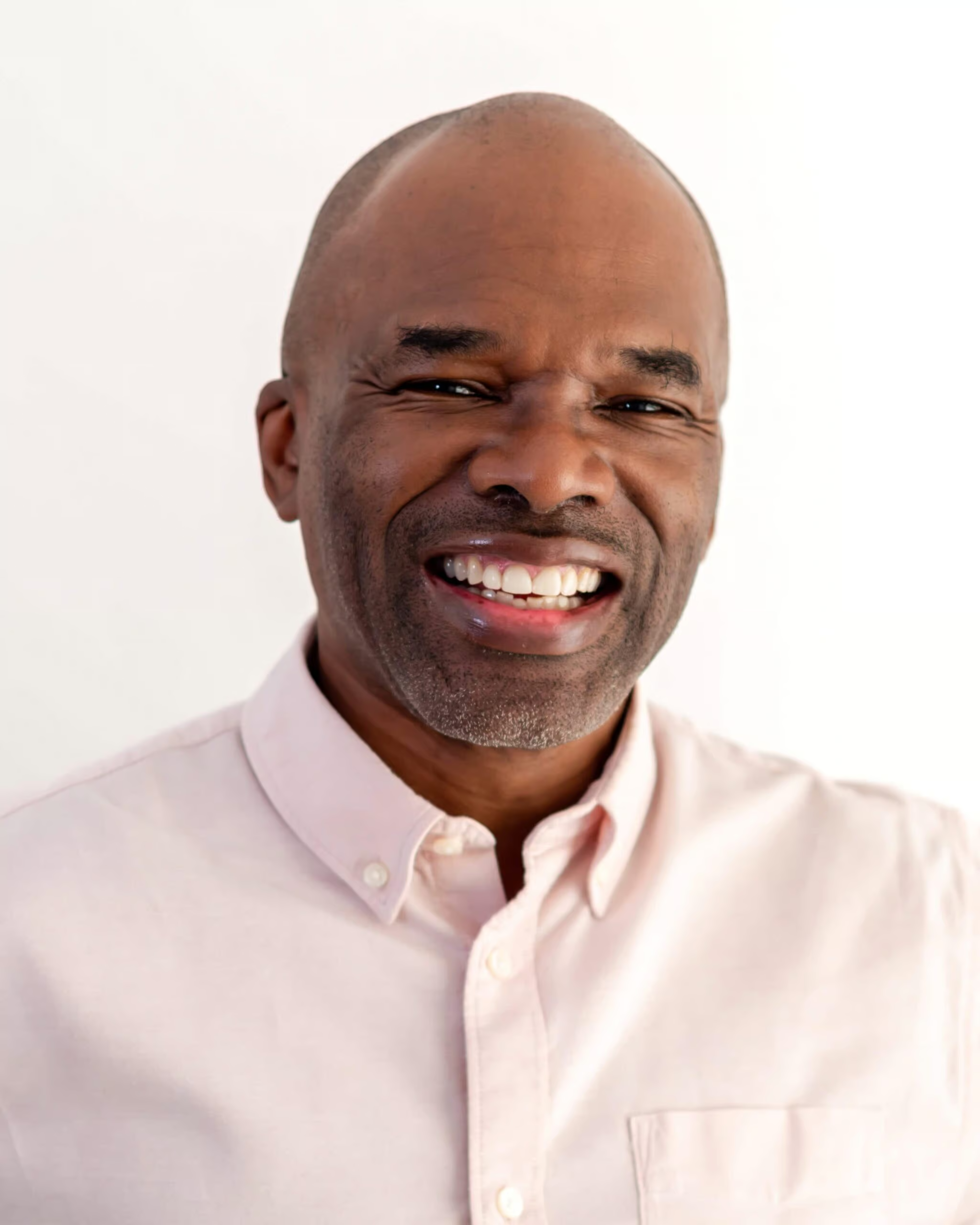
Who I Am
Ade, Probate and Estate Administration Specialist
I have spent 35 years helping families through probate, and I have learned that what people need most during this time is someone who takes the weight off their shoulders and explains things clearly.
My name is Ade, and I handle probate and estate administration personally. I do not delegate your case to a team. When you work with me, you get one point of contact who knows your estate inside out and is available whenever you need to talk.
I have administered hundreds of estates with values ranging from £500,000 to £5 million. Some are straightforward. Others involve inheritance tax, multiple properties, family disputes, or missing documentation. Whatever the situation, my approach is the same: I take over the full process, I explain everything in plain English, and I make sure the right people receive the right amount as efficiently as possible.
I work with families across Banstead, Nork, Burgh Heath, Tadworth, Kingswood, Chipstead, and the wider Reigate and Banstead borough, as well as throughout England and Wales. Whether you are local or the estate is here but you live elsewhere, I can help.
If you need probate help, I am here.
BOOK YOUR CONSULTATIONMy name is Ade, and I handle probate and estate administration personally. I do not delegate your case to a team. When you work with me, you get one point of contact who knows your estate inside out and is available whenever you need to talk.
I have administered hundreds of estates with values ranging from £500,000 to £5 million. Some are straightforward. Others involve inheritance tax, multiple properties, family disputes, or missing documentation. Whatever the situation, my approach is the same: I take over the full process, I explain everything in plain English, and I make sure the right people receive the right amount as efficiently as possible.
I work with families across Banstead, Nork, Burgh Heath, Tadworth, Kingswood, Chipstead, and the wider Reigate and Banstead borough, as well as throughout England and Wales. Whether you are local or the estate is here but you live elsewhere, I can help.
If you need probate help, I am here.
Frequently Asked Questions
Our family home in Banstead is worth around £660,000. Will the estate have to pay inheritance tax?
It may, and it is one of the first things I check. Everyone can pass on £325,000 free of inheritance tax, rising to £500,000 if the home goes to children or grandchildren, and a married couple can usually combine their allowances up to £1,000,000. A typical Banstead home sits around £660,000, with detached houses often well over £900,000, so the property alone can use up a single person’s allowance before savings and pensions are added. Whether tax is actually due depends on the full estate, who inherits, and any gifts made in the last seven years. I calculate all of it and handle the HMRC forms for you.
My mother lived in a retirement flat in Banstead. Does a leasehold retirement property change how probate works?
It adds a few steps. Banstead has a good deal of later-living and retirement housing, and these flats are almost always leasehold, so I deal with the freeholder or managing agent as part of the estate. That means settling any outstanding service charges and ground rent, checking how many years remain on the lease, and reading the lease terms closely, because some retirement leases carry an exit or transfer fee that falls due when the flat is sold or passed on. I obtain a proper valuation, notify the management company, and make sure none of these charges are missed before the flat is sold or transferred.
My parents owned their Banstead house outright for decades. Does having no mortgage make probate simpler?
In one way yes, because there is no lender to repay before the estate can be settled. But long-held Banstead homes bring their own points to watch. A house owned for thirty or forty years has usually grown a great deal in value, which raises the chance of inheritance tax, and HMRC will want a proper open-market valuation at the date of death rather than a rough estimate. Older title deeds can also carry out-of-date boundary or ownership details that need tidying up before a sale. I handle the valuation, the tax position, and any title issues together.
House prices in Banstead have dipped slightly. How is the property valued for probate, and does a falling market matter?
For probate and inheritance tax, the value that counts is the open-market value on the date of death, not the price you eventually sell for. For a higher-value or detached Banstead home I usually recommend a formal RICS valuation, because HMRC looks at these more closely than an estate-agent estimate. A softer market can actually work in the estate’s favour: if the property later sells for less than the probate value within a set period, it is sometimes possible to reclaim part of the inheritance tax paid. I keep an eye on this and make the claim where it applies.
Take the Next Step
If someone close to you has passed away and you are dealing with an estate in Banstead or the surrounding area, I am happy to talk through your situation at no cost. I will review the details, explain what needs to happen, and give you a clear, fixed-fee quote so you know exactly where you stand. There is no obligation and no pressure. Many families find that a single conversation is enough to bring clarity to what feels like an overwhelming situation. Call me or book a consultation online.
BOOK FREE CONSULTATION